Core Philosophy of Huawei’s EV Powertrain Integration
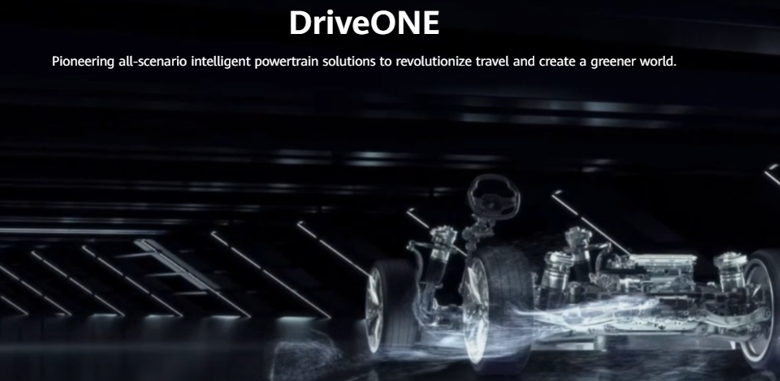
For years, traditional automakers have grappled with fragmented EV powertrain development: sourcing motors from one supplier, electronic control units (ECUs) from another, and gearboxes from a third, leading to compatibility gaps, extended R&D timelines, and suboptimal system efficiency. Huawei’s approach redefines this model by prioritizing full-stack integration—controlling every layer from microchips to software to create a cohesive, high-performance powertrain unit. Unlike third-party suppliers that focus on individual components, Huawei designs its integrated systems to work in sync, eliminating the friction that comes with cross-vendor coordination. For example, its DriveONE powertrain line combines a permanent magnet synchronous motor, SiC-based ECU, and single-speed reducer into a single modular unit, cutting part count by 25% and reducing volume by 20% compared to standalone components. This philosophy isn’t just about physical assembly; it’s about aligning the electrical, mechanical, and software layers to maximize efficiency, reliability, and driver experience. Huawei’s engineers also emphasize user-centric integration: every adjustment to the powertrain is calibrated to match real driving behaviors, not just lab benchmarks, ensuring that daily commutes and long trips feel smooth and predictable.
Key Technological Backbones for Seamless Integration
The success of Huawei’s powertrain integration hinges on three core technological pillars that address real-world EV challenges. First, full-stack hardware synergy: Huawei develops its own SiC power semiconductors, which are critical for high-efficiency power conversion in EVs. The SiC-based ECU in DriveONE can handle higher voltage and current than silicon-based alternatives, boosting motor efficiency to 93.5%—a 3% improvement over most standalone ECUs. This translates directly to longer range, EV powertrain integration as less energy is lost during power transfer. Second, software-defined powertrain control via HarmonyOS for Smart Cockpit and Vehicle. This operating system acts as a central nervous system, processing real-time data from the battery management system (BMS), motor, and chassis to adjust power delivery dynamically. For instance, during highway cruising, HarmonyOS can reduce motor speed and optimize battery discharge rate to cut energy consumption by up to 5% compared to fixed-control systems, while still maintaining consistent acceleration when needed. Third, integrated thermal management: Huawei merges the thermal systems for the battery, motor, and ECU into a single loop, eliminating redundant components and reducing energy waste. In cold climates, this system preheats the battery and motor 10 minutes before departure, preserving 8-10% of the range that would otherwise be lost to low temperatures; in hot conditions, it cools all components uniformly to prevent performance degradation during heavy use. These pillars work together to create a powertrain that’s not just efficient, but also adaptive to different driving scenarios, from city stop-and-go to high-speed highway runs.
Real-World Applications in Passenger and Commercial EVs
Huawei’s integrated powertrain solutions have already been deployed across a range of EV models, demonstrating their versatility and real-world value. The first high-profile example is the Arcfox Alpha-S HI Edition, a passenger EV co-developed with BAIC BluePark. This model uses Huawei’s DriveONE 250kW powertrain, which delivers 473kW of total power (from dual motors) and 650Nm of torque, enabling a 0-100km/h acceleration of just 4.2 seconds. More importantly, the integrated design allows for a CLTC range of 708km—10% higher than comparable standalone powertrains in similar vehicles, according to BAIC’s internal testing. Another case is the AITO M5, a smart SUV under Seres Group that uses Huawei’s range-extender powertrain. The AITO M5’s powertrain combines a 1.5L range extender, 200kW DriveONE motor, and 40kWh battery, delivering a CLTC combined range of 1,242km. Users have praised the NVH performance, as the integrated design eliminates the harsh vibration and noise common in range-extender vehicles; during idle mode, the range extender’s noise is barely noticeable, a result of Huawei’s synchronized control of the engine and motor. Beyond passenger cars, Huawei has expanded to commercial EVs: it partnered with Sany Heavy Industry to integrate its powertrain into electric concrete mixers. The integrated system reduces the mixer’s curb weight by 1.2 tons, increasing load capacity by 5% while maintaining a range of 200km on a single charge—30% longer than existing models. Commercial operators also benefit from lower maintenance costs, as the reduced number of connectors and simpler design cut the risk of component failure by 25%, lowering long-term service expenses significantly.
Future Evolution of Huawei’s Integrated Powertrain Systems
Looking ahead, Huawei is refining its integrated powertrain to meet the next generation of EV demands, focusing on three key areas that will set new industry standards. First, intelligent torque vectoring: by pairing the powertrain with Huawei’s in-house autonomous driving sensors and computing platform (MDC), the system will adjust torque distribution across individual wheels in real time. For example, on wet or icy roads, it can send 20-30% more torque to wheels with better grip, improving stability and reducing stopping distance by up to 10%, while still maintaining responsive acceleration when driving on dry pavement. Second, V2G (Vehicle-to-Grid) integration: Huawei’s current powertrains already support bidirectional power flow, allowing EVs to feed excess battery power back to the grid during peak demand. Future iterations will integrate this capability more deeply, syncing with smart grids to optimize charging and discharging for both the driver’s needs and grid stability—for instance, charging during off-peak hours when electricity is cheap, and selling power back when grid prices are high, creating additional value for EV owners. Third, compatibility with next-gen battery tech: Huawei is designing its integrated powertrains to work seamlessly with solid-state batteries, which offer higher energy density and faster charging. The upcoming 800V high-voltage architecture in DriveONE 3.0 models will support ultra-fast charging—up to 200km of range in just 10 minutes—when paired with solid-state batteries, a feature that will address one of the biggest pain points for long-distance EV travel. Additionally, Huawei is expanding its partnership model, moving beyond component supply to full powertrain integration for mid-sized automakers that lack in-house EV development capabilities. This will allow smaller players to offer competitive EVs without investing billions in R&D, accelerating the adoption of integrated powertrain technology across the industry and making advanced EVs more accessible to global consumers.